
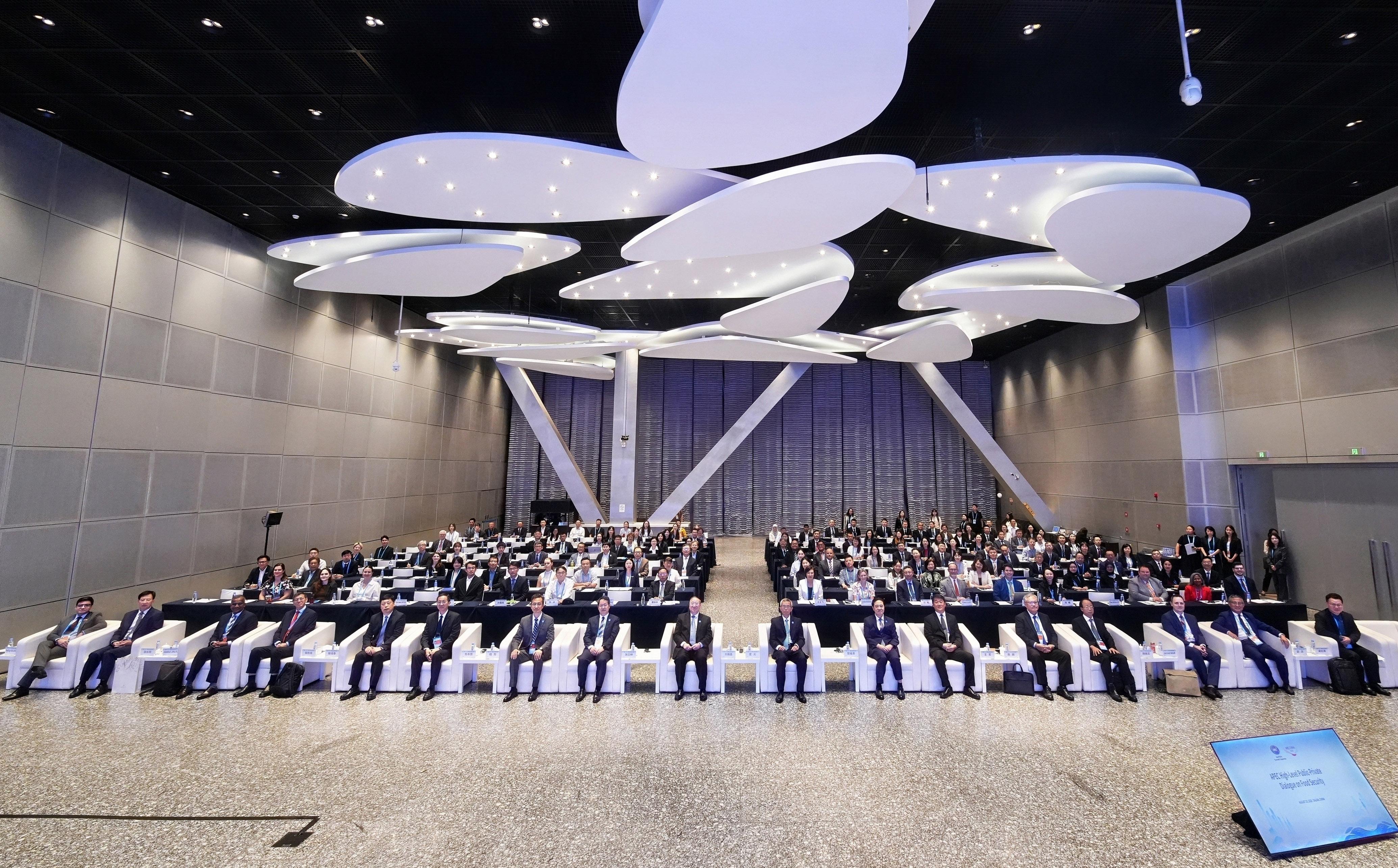
On August 20, the APEC High-Level Public-Private Dialogue on Food Security took place in Dalian, Liaoning Province, China. The Opening Ceremony was attended by Liu Huanxin, Administrator of the National Food and Strategic Reserves Administration (NAFRA) of the People's Republic of China; Xia Guang, Member of the Standing Committee of the National People's Congress (NPC) and Member of the NPC Agriculture and Rural Affairs Committee; Zhang Lilin, Vice Governor of Liaoning Province; Gong Fuqing, Chairman of the Dalian Municipal Committee of the Chinese People's Political Consultative Conference (CPPCC); and Cheng Lie, APEC Senior Official for China, all of whom also delivered remarks.
Wang Hong, Deputy Administrator of NAFRA, presided over the Opening Ceremony, while Teng Zengtai, Chief Engineer of NAFRA, delivered the closing remarks. Han Jizhi, Chair of the 2026 APEC Policy Partnership on Food Security (PPFS), was also present at the meeting.
Liu Huanxin noted that food security is fundamental to human survival and development and is a shared concern of all APEC member economies. During the 14th Five-Year Plan period (2021-2025), China continued to strengthen the foundations of food security. The grain market remained generally stable, its capacity to ensure the grain circulation continued to improve, and the grain industry gained increasing momentum for development. In addition, China's food security governance became significantly more effective, and international exchanges and cooperation on food security continued to deepen. These efforts not only created favorable conditions for China's economic and social development, but also made a positive contribution to food security in the Asia-Pacific region and beyond.
During the 15th Five-Year Plan period (2026-2030), China will take an integrated approach to increasing both grain production capacity and grain output, balancing grain production with ecological conservation, and promoting both higher grain yields and higher incomes. China will continue to enhance overall grain production capacity, ensure stable grain prices and supplies, and advance the modernization of grain storage and logistics. It will also continue to drive industrial transformation and upgrading through scientific and technological innovation, improve the food security governance system, and strengthen national food security.
To deepen cooperation on food security in the Asia-Pacific region in the years ahead, Liu Huanxin put forward the following three proposals to APEC member economies:
First, we should harness digital and intelligent technologies to scale up the application of innovations across the grain industry chain, promote the application of artificial intelligence (AI), digital technologies, and intelligent processing throughout the grain industry chain, and facilitate trusted data sharing to provide a sound scientific basis for risk assessment, policymaking, and emergency response.
Second, we should promote inclusive and shared benefits by focusing on the actual needs of different economies and continuing policy discussions, technical training, and experience sharing to help small-scale producers, small and micro enterprises, and start-ups gain better access to information, technology, financing, and market opportunities, so that the benefits of innovation-driven development can be shared more broadly and equitably by APEC economies and their people.
Third, we should uphold openness and win-win cooperation by deepening public-private partnerships involving diverse stakeholders, encouraging government agencies, enterprises, research institutions, and international organizations to work together, and fostering a market-oriented, law-based, and internationalized business environment to achieve mutual benefit and win-win outcomes.
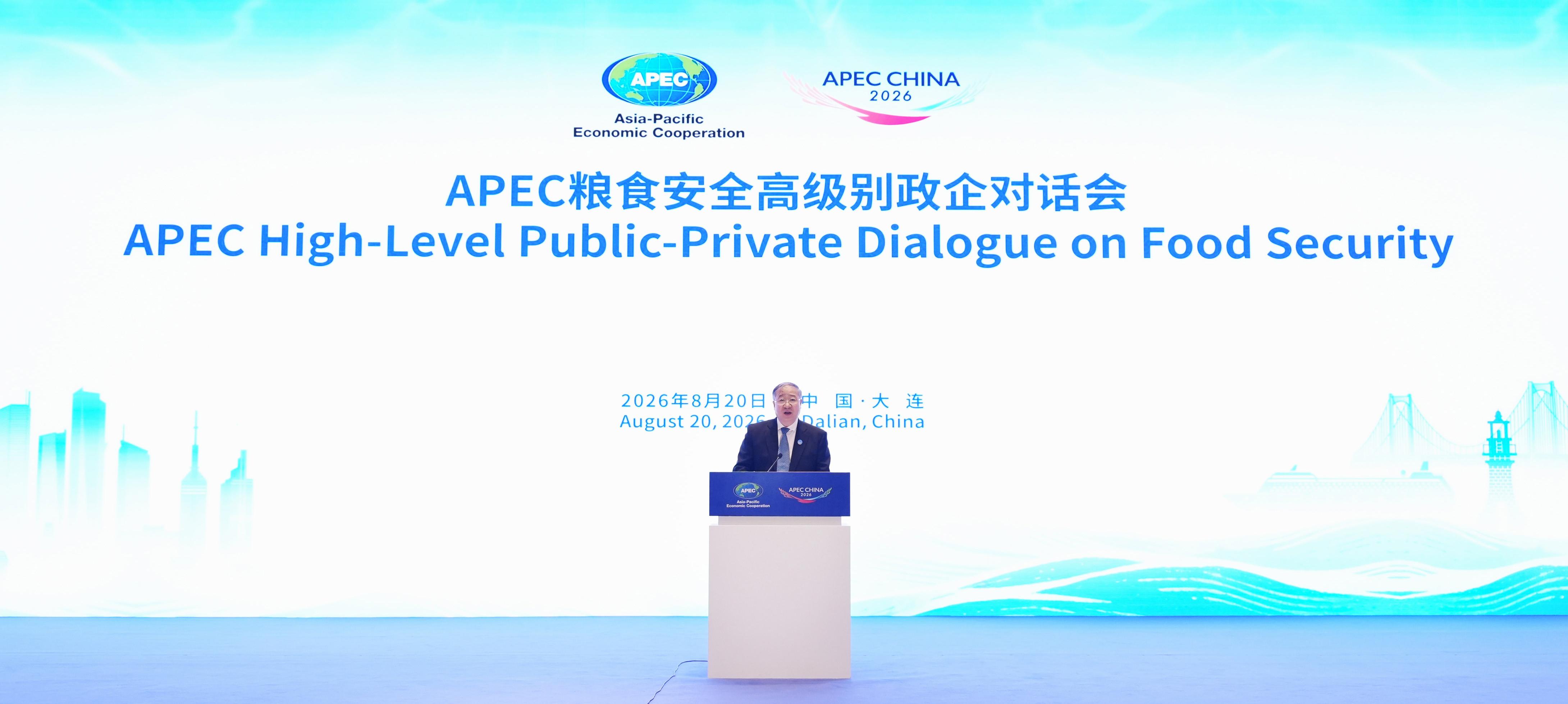
The dialogue was held under the theme "Innovation-Driven, Win-win Cooperation: Building More Resilient, Efficient, and High-Quality Food Systems for the Asia-Pacific." A thematic forum was organized on "New Opportunities for High-Quality Development of the Grain Industry and Regional Cooperation on Food Security in the Asia-Pacific," with discussions focusing on "Resilience of the Industry Chain and Synergy between Fiscal and Financial Policies" and "Digitalization and Technological Innovation Driving the Transformation and Upgrading of the Grain Industry." The event brought together nearly 150 representatives from government departments, business associations, research institutions, and international organizations from APEC member economies.
Before the event, the participants visited China Grains & Logistics Corporation Beiliang Co., Ltd., COFCO Oils & Oilseeds (Dalian) Co., Ltd., and Dalian Hongrun Whole Grain Foodstuffs Co., Ltd. The Academy of National Food and Strategic Reserves Administration (Academy of NAFRA) hosted the Fourth APEC Seminar on Digitalization and Innovation in the Grain Industry Chain.