
The 16th Asia-Pacific Economic Cooperation (APEC) Energy Ministerial Meeting was held in Beijing on September 10-11. Ding Xuexiang, a member of the Standing Committee of the Political Bureau of the Communist Party of China (CPC) Central Committee and Vice Premier of the State Council, attended and addressed the opening ceremony.
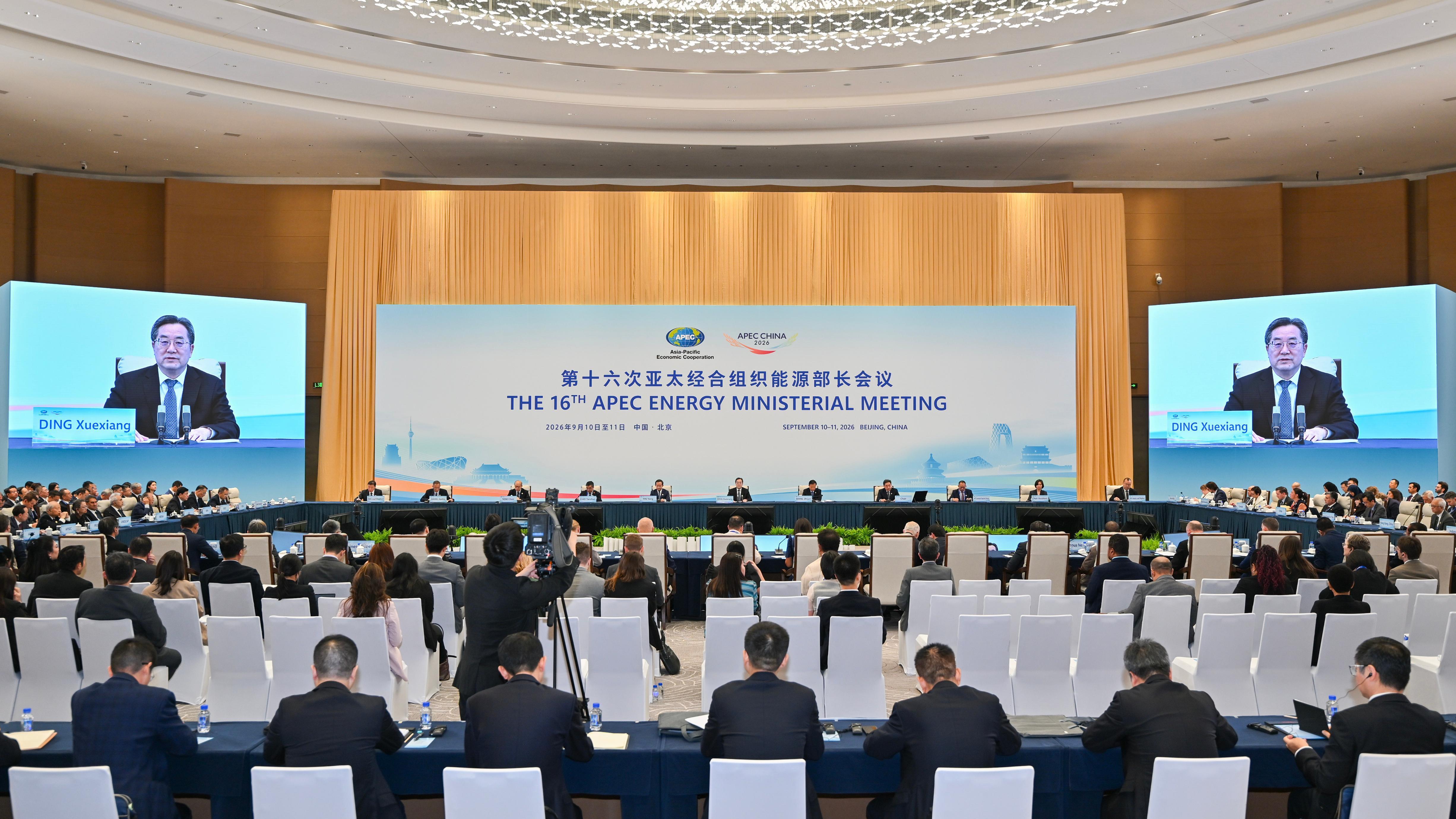
Ambassador Chen Xu, Chair of the APEC Senior Officials' Meeting 2026, Eduardo Pedrosa, Executive Director of the APEC Secretariat, and Shan Weiguo, Shepherd of the APEC Energy Working Group (EWG), attended and spoke at the meeting. Wang Hongzhi, Administrator of China's National Energy Administration (NEA), chaired the meeting as its Chair and elaborated on China's energy theme and priorities for the APEC China Year. Yin Yong, Mayor of Beijing, attended the opening ceremony. Around 300 people participated, including energy ministers and representatives of APEC member economies, APEC observers, and heads of relevant international organizations.
Vice Premier Ding Xuexiang noted that China has been actively engaged in pragmatic energy cooperation within the APEC framework, effectively promoting regional energy development, and making important contributions to safeguarding global energy security. China will always defend the stability of global energy markets, contribute to the global green and low-carbon transition, and participate in international energy cooperation. China is willing to work with all parties to advance global energy security and sustainable development. He urged efforts to vigorously develop distributed energy sources and charging infrastructure to enhance inclusive energy development in the Asia-Pacific region. He called for conducting collaborative research and development on emerging technologies such as new energy storage and digital grids, and promoting mature technologies and application scenarios to better empower the energy transition in the Asia-Pacific region. It is necessary to ensure the stable operation of energy industrial and supply chains and facilitate the smooth functioning of regional and global energy markets, he added.
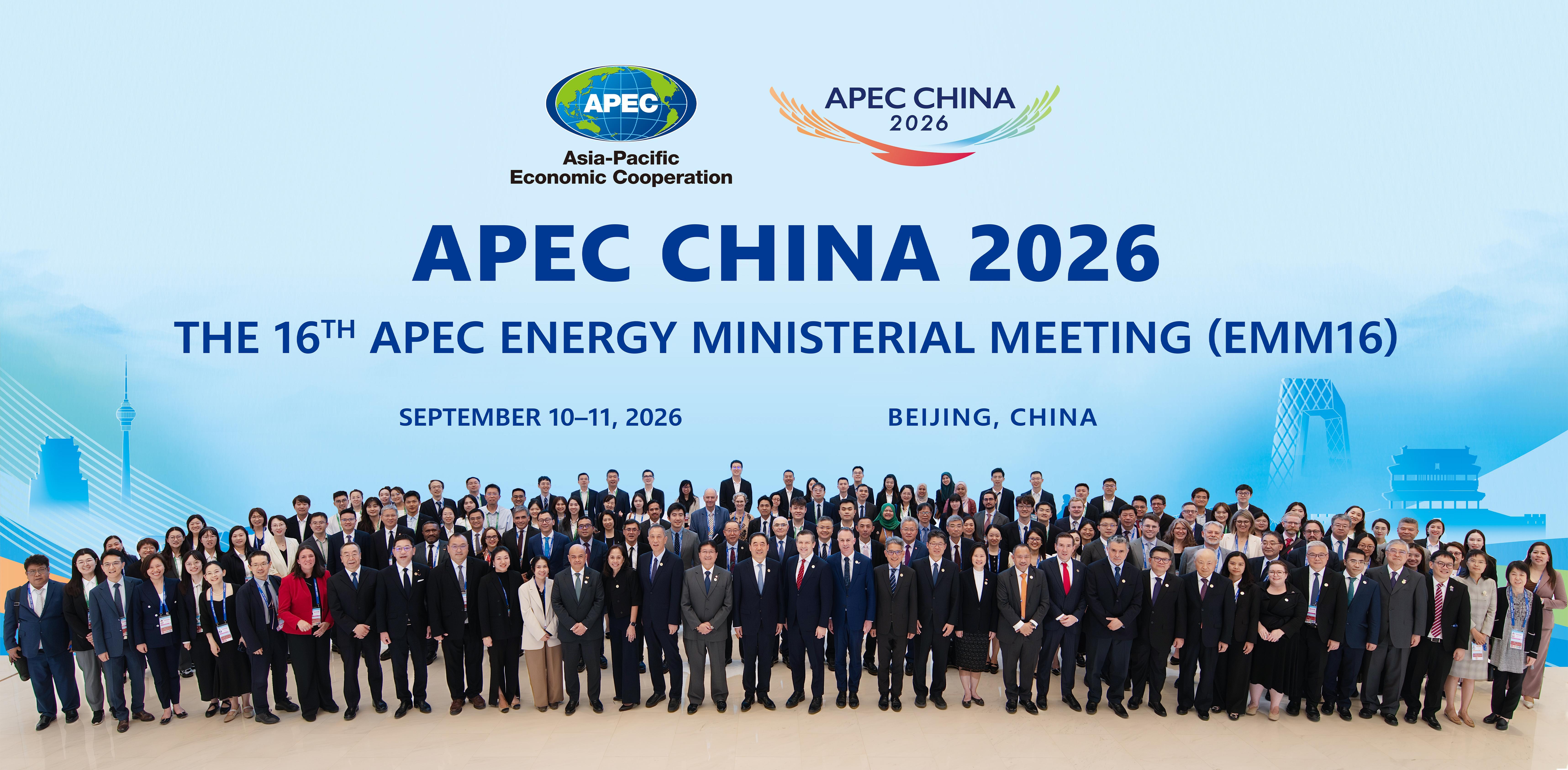
Under the theme of "Forge an Innovative and Synergistic Asia-Pacific Energy Community for All," ministers and representatives from participating economies held in-depth discussions on three topics: high-quality energy for all, mutual enhancement between AI and energy, and Energy Synergistic Cooperation.
The meeting produced a "1+3" package of outcomes, comprising one Ministerial Joint Statement and three consensus documents.
As the overarching vision for Asia-Pacific energy cooperation, the 2026 APEC Energy Ministerial Meeting Joint Statement integrates, for the first time, the vision of a community with a shared future for mankind with the practice of Asia-Pacific energy cooperation, and systematically articulates the core meaning of an "Asia-Pacific energy community." The three documents provide practical guidance along the dimensions of innovation and synergy and for all:
The Vision and Proposed Actions on Universal Access to High-Quality Energy in APEC defines, for the first time, high-quality energy as "security, reliability, abundance, resilience, universality, sustainability and affordability," and shifts the focus of cooperation from basic energy access to the upgrading of service quality.
The APEC Policy Recommendations on the Mutual Enhancement Between AI and Energy in the Asia-Pacific (2026–2030) is the first consensus document under the APEC framework dedicated to mutual enhancement between AI and energy, and provides for the establishment of a dedicated "AI + Energy" Task Force under the EWG.
The APEC Non-Binding Principles for Promoting Energy Security Synergy builds on the Energy Security Initiative adopted at the 2001 APEC Economic Leaders' Meeting in Shanghai, and offers guidance for the region in addressing energy market volatility, supply chain risks and other challenges.
In response to the calls of APEC economies and to address common technical challenges in energy transition, urban development and other fields, China also rolled out five host-economy voluntary contributions. Specifically, the State Grid Corporation of China shared its experience in disaster prevention and mitigation, emergency support and flexible regulation of power systems; China Southern Power Grid presented practical pathways for source-grid-load-storage coordination and digital-intelligence empowerment; Tianjin University put forward a cooperation framework for zero-carbon and near-zero-carbon cities; Peking University proposed a paradigm for enterprise participation in collaborative Asia-Pacific energy governance; and China Energy Investment Corporation established an Asia-Pacific Clean Energy Training Institute, whose inaugural training session was completed in Fuzhou in August. Addressing energy issues of common concern, the five contributions systematically showcased the economic value and practical experience of China's new energy system and won positive feedback from all parties.
In addition, China announced at the Ministerial Meeting that it will provide 1,000 clean energy training places for APEC economies over the next decade, making capacity building regular and institutionalized.